How to Choose the Right Printing Paper for Every Purpose – Simple Expert Tips
Are you unsure which printing paper is best for your project? Whether you’re a small business or a professional print shop, picking the right paper makes your prints look great and helps you save money. Here are some easy but very useful tips to help you choose with confidence!
1. Common Paper Types and Key Features
In the printing market, different papers suit different needs. According to print experts and top-performing websites, Coated Art Paper (Couche), Offset Paper (Ford/Fort), Bristol Board, and Ivory Board are the “top players.”
Coated Art Paper (Couche)
If you want sharp images and bright colors, coated art paper is your go-to choice. It comes in glossy or matte finishes, perfect for catalogs, brochures, and premium prints. It costs more than plain paper, but you get vibrant, eye-catching results.
Offset Paper (Ford/Fort)
Popular in offices, this paper has a slightly rough surface that holds ink well and is budget-friendly. It’s ideal for printing documents, contracts, and daily company materials. For internal reports or letters, offset paper is a great pick.
Bristol Board
Use Bristol when you need a sturdy, high-end feel. It’s thick, smooth on both sides, and great for invitations, business cards, or luxury packaging. It rarely smudges with offset or laser printing.
Ivory Board
Ivory board is smooth or lightly coated, thick and rigid. It’s often used for book covers, gift boxes, or any product that needs a classy, durable finish.
2. Choosing Paper by Weight (GSM) and Purpose
Paper weight, measured in GSM (grams per square meter), is crucial. Matching the right weight to your use saves money and ensures the best look and feel.
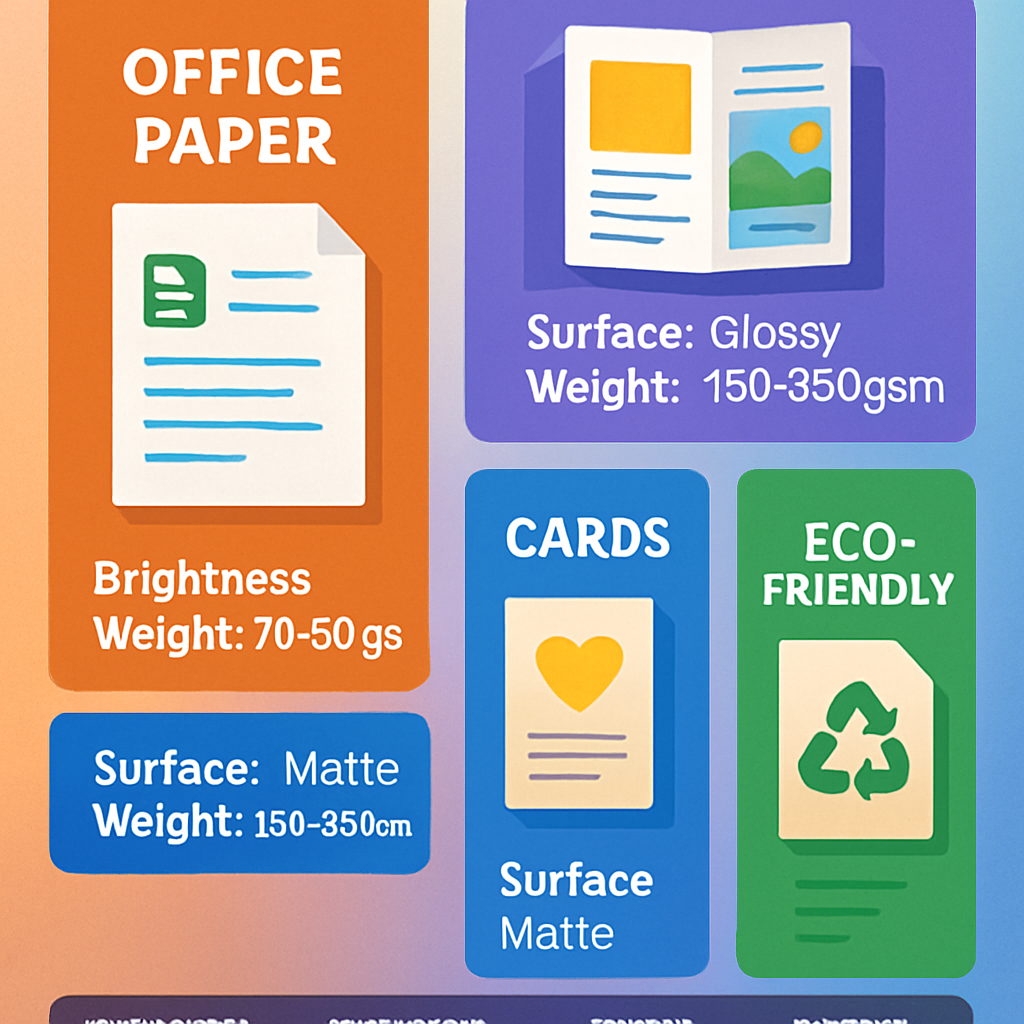
- 35–85 GSM: Thin paper for A4, photocopy, reading materials—no need for stiffness.
- 70–100 GSM: Office paper for contracts, letters, letterhead.
- 90–150/250 GSM: Brochure inserts, flyers, and thin covers.
- 230–350/500 GSM: Business cards, book covers, premium boxes—high stiffness and durability.
Example: For a product brochure, use 150–250 GSM coated art paper for the inside pages and 300–350 GSM Bristol board for the cover to look professional and elegant.
3. Money-Saving and Practical Tips
- Right paper choice makes prints look professional and reduces costs for large runs.
- Use standard sizes like A4 or A3 to make cutting easier and avoid waste.
- Avoid paper that’s too thin or not compatible with your printer to prevent jams.
- For outdoor or humid environments, pick thicker paper to avoid tearing or ink peeling.
- Request a paper sample before a big print run to ensure top quality.
Contact our trusted print center at 090 3126 675 for expert advice on the best paper for your project!
4. Quick Reference: Paper Types by Application
| Paper Type | Use |
|---|---|
| Offset Paper 70–100 GSM | Documents, internal printing |
| Coated Art Paper 150–250 GSM | Brochures, catalogs, flyers |
| Bristol Board 300–350 GSM | Business cards, invitations, book covers |
| Ivory Board | Gift boxes, luxury packaging |
| Coated Art Paper 120–250 GSM | Posters, banners, ads |
5. Ordering Professional Printing Paper – What to Note
When buying paper, choose a reliable supplier to ensure correct weight, color, and print compatibility. Always ask for samples before placing a large order to guarantee quality.
We’re ready to help you pick the perfect paper for any print job. Call 090 3126 675 for personalized advice!
6. Conclusion – Don’t Overlook Paper Choice for Effective Printing
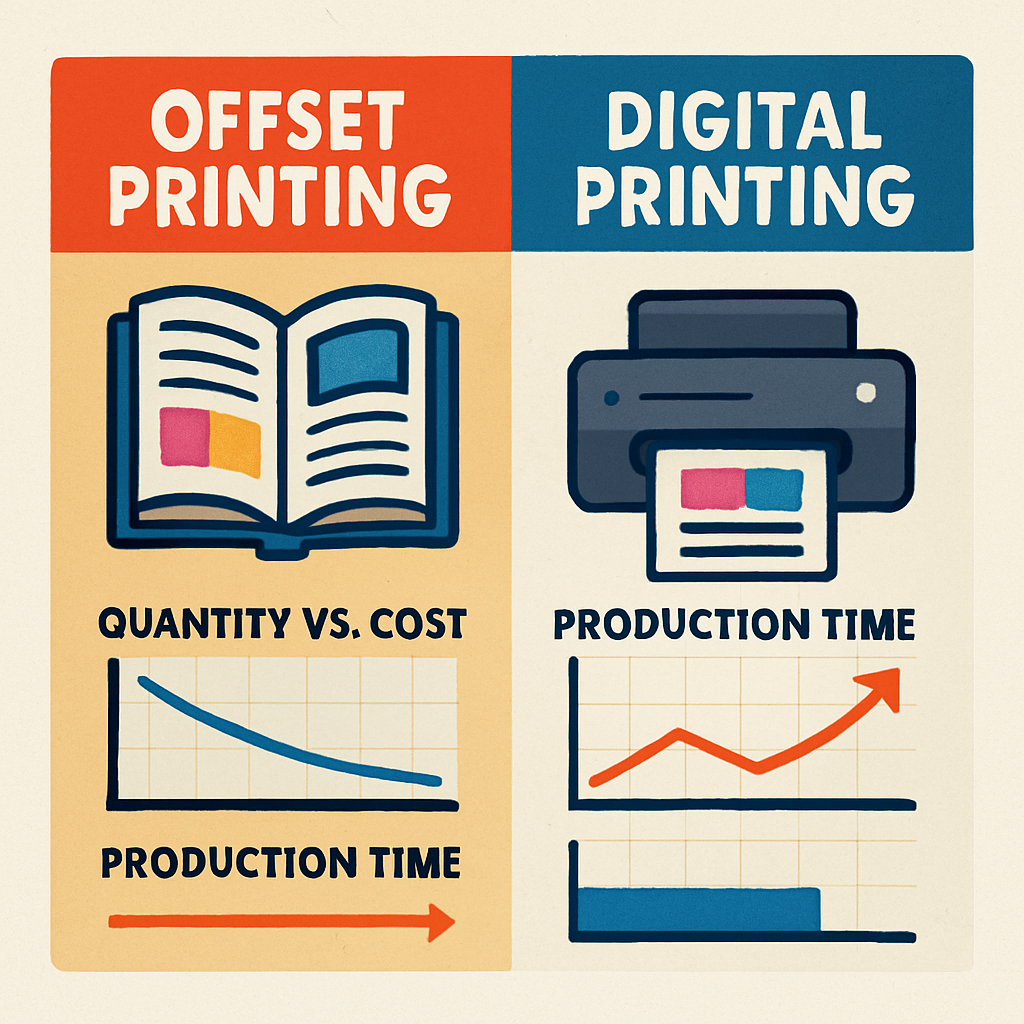
Picking the right printing paper makes your work look better, more professional, and helps you save money. Consider your purpose, quantity, and budget to choose the best option.
If you still have questions, don’t hesitate to call our experts at 090 3126 675 for more details!
Check Our Professional Printing Services At:
www.inanthietke.vn – Creative team, competitive prices, guaranteed quality.
Contact Us:
- Email: info@inanthietke.vn
- Website: https://inanthietke.vn
- Call: +84 0823 940 524 / 0903 126 675