Hello dear friend!
Are you looking to learn about different types of business card paper that give a professional and luxurious impression? I understand exactly how you feel. Choosing paper is not only about quality but also has a big impact on your brand image. In this article, let’s explore the most popular business card papers available today, review their features, pros and cons, and help you pick the best option for your needs.
Why is choosing the right paper important?
A beautiful business card needs more than just an attractive design; the paper quality makes a huge difference in thickness, durability, print clarity, and the overall feel when you hand it to a client. Typical paper weights for business cards range from 200–350 gsm, ensuring rigidity and resistance to bending or tearing. Surface finishes—smooth, glossy, or matte—also convey your personal or corporate style.
Popular Types of Business Card Paper
Here are the most common papers used by printing services in Vietnam, which you can compare based on your budget and style:
• Couche Paper
– Weight: 90–300 gsm
– Surface: Glossy or smooth
– Pros: Excellent ink absorption, sharp colors, affordable price
– Cons: Glossy finish may reflect light too much if not chosen carefully
• Bristol Paper
– Weight: Typically 200–300 gsm
– Surface: Slightly glossy, fine texture like premium art paper
– Pros: Sturdy, vibrant colors, professional and luxurious look
– Cons: Higher cost than standard papers
• Ford Paper
– Weight: 60–250 gsm
– Surface: Matte, slightly rough
– Pros: Low cost, easy to print in office settings
– Cons: Feels simple, less premium for high-end cards
• Ivory Paper
– Weight: 200–300 gsm
– Surface: Smooth, warm off-white
– Pros: Good durability, crisp printing, elegant and refined feel
• Kraft Paper
– Weight: 200–350 gsm
– Surface: Natural brown, rough texture
– Pros: Eco-friendly look, durable, trendy for green brands
– Cons: Limited color range, rustic appearance
• Fine Art / Conqueror / Kishu Paper
– Weight: 200–350 gsm
– Surface: Textured, metallic or embossed options
– Pros: Ultra-premium, unique texture, ideal for luxury or creative projects
– Cons: Expensive, requires precise printing technique
• Crystal Paper
– Weight: 200–300 gsm
– Surface: One side glossy, one side matte
– Pros: Highlights images/logo, eye-catching shine
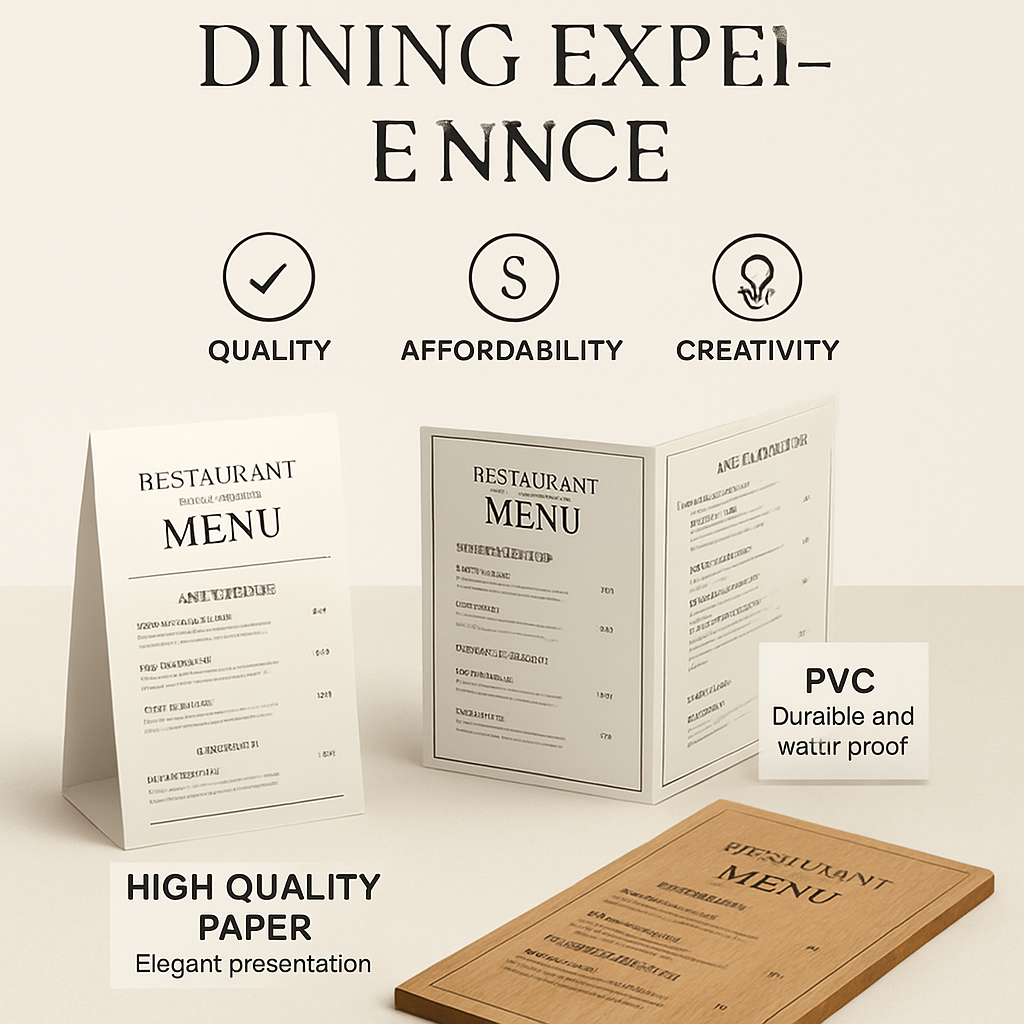
• PVC (Plastic)
– Weight: 200–350 gsm equivalent
– Surface: Smooth plastic
– Pros: Waterproof, weather-resistant, very durable, ideal for outdoor use or premium cards
How to Choose the Right Paper for Your Business Card
Consider these main factors:
1. Budget: Do you have a limited printing budget?
2. Brand Style: Luxury, modern, eco-friendly or casual?
3. Usage Purpose: Short-term giveaway, long-term networking, or special event?
4. Print Quality: Do you need high detail or simple text and logo?
For example:
– Modern, dynamic style → Glossy Couche or Kraft paper.
– Elegant, premium image → Conqueror or Ivory paper.
Tips for Choosing Business Card Paper
• Don’t skimp on quality—thin or low-grade paper gives a poor first impression.
• Ask reputable print shops for advice to match your needs.
• Request a sample print before ordering in large quantities to ensure the best result.
Conclusion
Selecting the right paper for your business card not only enhances your professional image but also leaves a lasting impression on clients. Feel free to contact our print center for free consultation—we’ll help you choose the perfect paper!
Hotline: 090 3126 675
Want to learn more about our design and printing services?
Visit: https://inanthietke.vn
Email: info@inanthietke.vn
Phone/WhatsApp: +84 0823940524
We are always ready to support your success!